2026-2027 Budget first look for businesses
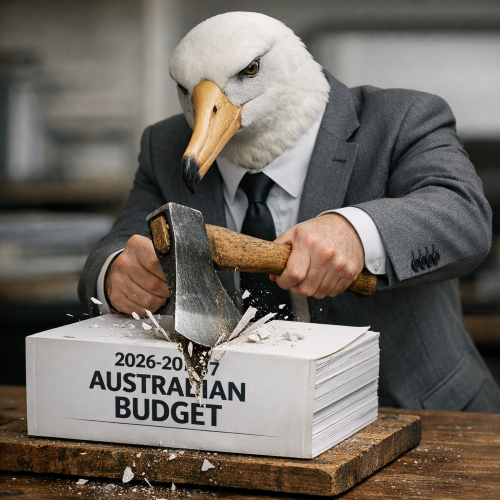
The 2026-2027 Federal Budget is probably the single largest betrayal of the Australian people by a government. The Albotross government not only did a 180 on the promises they made during the 2025 federal election, when the Albotross emphatically stated when asked a question on whether they intend to introduce changes to capital gains or negative gearing, “I have answered that question 50 times already and the answer is still no”. Well 51 times no, turned into the 52nd question being a big fat YES, he gave the Australia people the finger, on Tuesday night. But I suppose what can we expect from a politician.
Below we have highlighted some of the significant changes faced by businesses. Treasurer Jim Chalmers handed down the 2026–27 Federal Budget on 12 May 2026. This update focuses on the measures most relevant to small and medium business (SMB) owners: what is changing, when it starts, and what to think about now.
We will send a separate newsletter that look at the changes for individuals and investors.
It is important to remember, these measures are announcements only, the final details will not be known for a while. As we know it can take a significant amount of time to draft the legislation, then it has to be passed.
The headline issue: 30% minimum tax on discretionary trusts, this is a significant issue for a lot of small businesses
Start date: 1 July 2028
This is the most significant structural change for many SMB clients. From 1 July 2028, trustees of discretionary (family) trusts will pay a minimum 30% tax on the taxable income of the trust.
- Individual and non-corporate beneficiaries receive a non-refundable tax credit for the trustee tax, any excess credits (where a beneficiary’s marginal rate is below 30%) is lost.
- Corporate beneficiaries (bucket companies) receive no credit at all. Bucket companies will end up with an effective tax rate of between 55% and 60%, according to the announcement.
- The government have said they will provide new limited rollover relief for discretionary trusts. Available for three years from 1 July 2027 to restructure out of a discretionary trust into a company or fixed trust.
- Excluded: fixed trusts, widely held trusts, complying super funds, special disability trusts, deceased estates, charitable trusts. Some primary production income is also excluded.
Worked example: A family trading trust
Assume a family trading trust earns net income of $120,000, the trustee will pay tax of $36,000 on the net income. The individual beneficiaries will receive a non-refundable tax credit of 30% of their distributions they receive, assume the net trust income is distributed in the following way:
| Beneficiary | Distribution | Tax paid under the current law | Tax paid by the trustee under the changes | Tax from 1 Jul 2028 (based on 2026 tax rates) |
| Spouse (no other income) | $45,000 | $4,288 | $13,500 | Tax paid after non-refundable credit $0* (net additional tax $9,212) |
| Adult child (student) | $20,000 | $738 | $6,000 | Tax paid after non-refundable credit $0* (net additional tax $5,262) |
| Bucket company (25%) | $55,000 | $13,750 | $16,500 | $13,750** (net additional tax $16,500) |
| Tax Paid: | ~$18,776 | $36,000 | $13,750 |
*Non-refundable 30% trustee tax — beneficiary’s marginal rate is lower, so the excess credit is lost.*
**Bucket company receives no credit for the 30% trustee tax — effectively final.**
The result: Total tax rises from around $18,776 (effective rate 15.6%) to $49,750 (~41%) more than double. The income-splitting benefit that has supported many small business structures for decades is largely neutralised. If you have been using a bucket company you are effectively being taxed twice on any trust distributions from a discretionary trust, once at the trustee level and again at the company level. As companies are not entitled to a credit for the tax paid by the trustee.
Action point: Between now and 1/7/2028 you should review whether a discretionary trust remains the right entity for you going forward.
Instant asset write-off — now permanent at $20,000
Start date: 1 July 2026 (permanent)
The $20,000 instant asset write-off for small business entities (aggregated turnover under $10 million) has been made permanent. The threshold applies on an asset-by-asset basis, after deducting GST credits. Assets costing $20,000 or more continue to be added to the small business pool.
After years of annual extensions, SMBs finally have certainty to plan capital purchases.
Loss carry-back — reintroduced
Start date: Tax years commencing on or after 1 July 2026
Companies with aggregated annual global turnover under $1 billion can carry back revenue losses (not capital losses) up to two years and offset them against tax paid earlier. The benefit is capped by the company’s franking account balance.
A useful cash flow lever for companies hitting a downturn after a profitable period.
Loss refundability for small start-ups
Start date: Tax years commencing on or after 1 July 2028
Start-up companies (aggregated turnover under $10 million) generating a tax loss in their first two years of operation can convert the loss into a refundable tax offset. The offset is capped at the value of FBT and PAYG withholding paid on Australian employee wages in the loss year.
Monthly PAYG instalments with dynamic calculations
Start date: 1 July 2027
Small and medium businesses will be able to opt in to monthly PAYG instalment reporting and payment, with ATO-approved dynamic calculations embedded in accounting software. Designed to smooth cash flow and reduce end-of-year surprises.
For those businesses and individual who have trouble putting aside the money to pay their tax this might be a good option.
R&D Tax Incentive reforms
Start date: 2028–29 income year
Key changes for businesses claiming R&D:
- Offset rate for core R&D expenditure increased by around 25–50%
- Intensity threshold reduced from 2% to 1.5%
- Supporting R&D expenditure no longer eligible
- Minimum annual spend lifted from $20,000 to $50,000
- Refundable offset turnover threshold raised to $50 million
- Maximum expenditure cap raised to $200 million
FBT — Electric vehicle discount scaled back
Start date: 1 April 2027 onwards
The full FBT exemption on battery and hydrogen electric cars is being progressively replaced by a permanent 25% FBT discount:
- Until 31 March 2027: current full FBT exemption continues.
- 1 April 2027 – 31 March 2029: full exemption only for EVs costing $75,000 or less. EVs above $75,000 but below the LCT fuel-efficient threshold receive a 25% FBT discount.
- From 1 April 2029: all EVs below the LCT fuel-efficient threshold receive only a 25% FBT discount.
Existing lease arrangements are grandfathered. Reportable fringe benefits amounts must still be calculated.
CGT changes affecting business asset disposals
Start date: 1 July 2027
The 50% CGT discount will be replaced with CPI cost-base indexation, with a 30% minimum tax rate on realised gains.
- Applies to all CGT assets, including pre-CGT assets and assets held in trusts and partnerships.
- Gains accrued before 1 July 2027 keep the 50% discount — assets will need to be valued at 1 July 2027.
- Applies to business sale proceeds, goodwill and share disposals.
Combined with the discretionary trust changes, business succession and exit planning will need a fresh look.
Small business CGT concessions — preserved
Importantly, the Division 152 small business CGT concessions are carved out of the CGT reform. The 15-year exemption, 50% active asset reduction, retirement exemption and small business rollover all remain available on the same eligibility rules. Gains that qualify for these concessions are not subject to the 30% minimum tax and are not re-cast onto cost-base indexation.
The catch — loss of stacking with the general 50% discount. Currently, an eligible individual or trust beneficiary can stack the general 50% CGT discount on top of the 50% active asset reduction, so only 25% of the gain is taxable. From 1 July 2027, the general 50% discount is gone — leaving 50% of the gain taxable at marginal rates when relying on the active asset reduction alone.
Quick example: A $400,000 capital gain on the sale of an active business asset. Under current rules, the general 50% discount and the 50% active asset reduction leave $100,000 taxable. From 1 July 2027, only the 50% active asset reduction applies — $200,000 is taxable at the owner’s marginal rate. No 30% minimum tax floor applies, but the effective tax outcome roughly doubles unless the 15-year exemption, retirement exemption or rollover can be used.
For clients planning a business sale, the value of the 15-year exemption and retirement exemption increases significantly — these remain genuinely concessional, while reliance on the active asset reduction alone will become materially more expensive.
Other items worth noting
- Venture capital tax incentives (VCLP/ESVCLP) expanded from 1 July 2027 — relevant if you are seeking growth capital.
- $1,000 instant deduction for work-related expenses from 2026–27 — available to sole traders and employees.
- $250 Working Australians Tax Offset from 2027–28 — available to sole traders deriving labour income.
- Small Business Debt Helpline and NewAccess for Small Business Owners mental health coaching — funding extended for three years.
What to do before 1 July 2027
- Trust structure review — particularly for trading trusts and structures using bucket companies. The three-year rollover window starts 1 July 2027, but planning should start now.
- CGT valuations — start identifying business and investment assets that may need 1 July 2027 valuations.
- Capital expenditure planning — the permanent $20,000 instant asset write-off allows proper multi-year planning.
- EV salary packaging — clients considering an EV through their business should weigh up locking in before 1 April 2027.